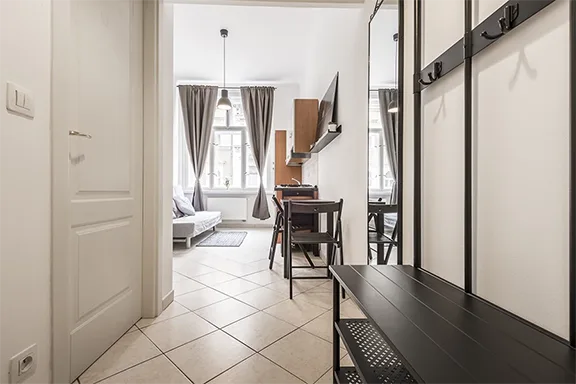
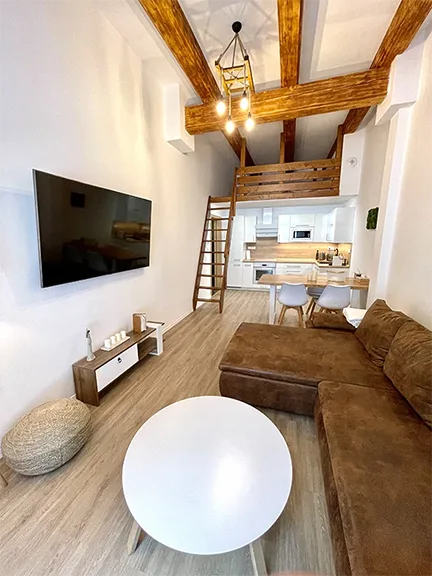


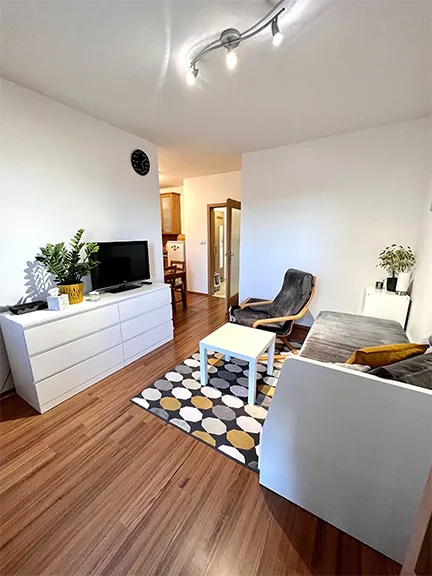
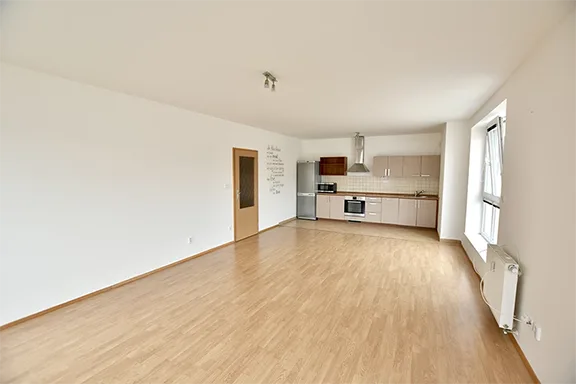
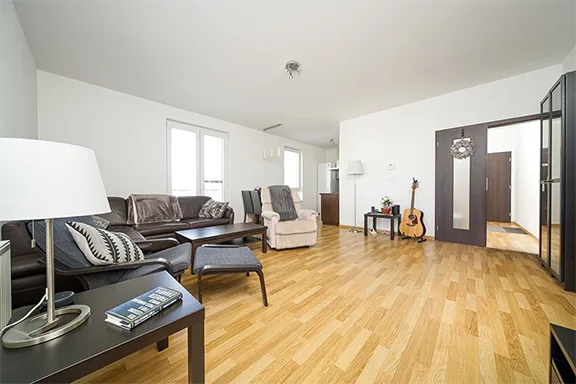
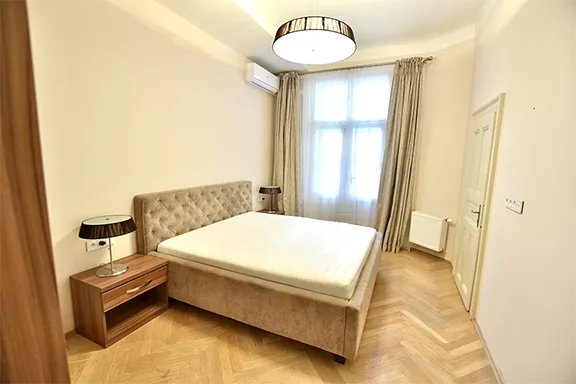
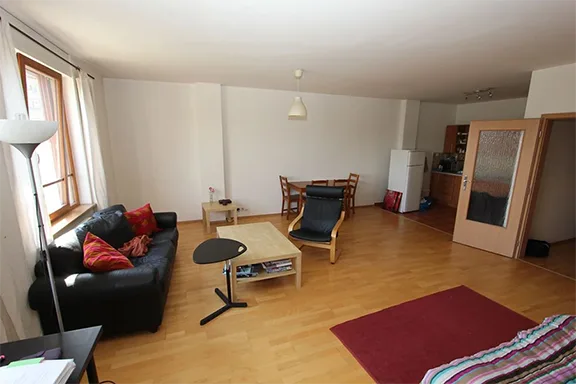




Furniture and interior (home staging)
- Interior designs and equipment from designers
- We buy and arrange everything at your request
- Higher aesthetic value will increase the market price

With us, you earn 4% more than if you take care of the apartment yourself. But most importantly, you save 960 hours per year, and you will be able to sleep well at night.
Inquire
Compare the estimated annual operating result of both options using your own prices, occupancy and costs. The calculation is before income tax and mortgage payments.
Calculation results
Long-term income is based on the monthly rent, adjusted for the number of vacancy days entered. Short-term income is the average nightly rate multiplied by the number of nights actually occupied. The calculator deducts the entered platform-fee percentage and the cost of each occupied night, then subtracts the annual operating costs entered for each option.
The estimate excludes income tax, financing, exceptional repairs and the value of your time. Enter each option’s costs separately and do not include service advances paid separately by the tenant or guest. This is an estimate, not a promise of a particular return.
The comparison is useful only when both options describe the same flat and the same period. For a long-term tenancy, enter a realistic monthly rent excluding service advances. For short stays, use the average price of nights actually sold, not the highest rate from peak season. Use the same property value for both yields. The figures prefilled in the calculator are examples only; replace them with your own estimates or last year’s records.
Separate income from money that merely passes through your account. A refundable deposit is not a return. A service advance that you fully reconcile is not rental profit either. By contrast, platform commission, management, owner-paid cleaning, linen and guest supplies are costs when you actually bear them.
For long-term letting, the calculator approximates annual receipts from monthly rent and the days the property is vacant. In practice, the timing of a tenant’s departure matters: preparing the flat, arranging viewings and signing the next agreement may create a longer gap than the empty days alone suggest. Enter a realistic average rather than an ideal year with no change of tenant.
For short stays, enter occupied nights directly. This is not the number of nights the property could theoretically be listed. Exclude repairs, dates reserved for your own use, seasonal declines and nights without a booking. If demand varies, calculate separate weak, typical and strong scenarios by changing the occupied-night assumption. One annual occupancy percentage can hide substantial differences between weekdays, weekends and seasons.
The average nightly rate may vary sharply over the year. Use the price guests actually paid after discounts and average it by nights sold. A simple average of advertised rates can overstate income when lower-priced dates account for most bookings. If you charge a separate cleaning fee, handle the related income and expense consistently. The calculator does not add or deduct it automatically because listings handle this charge differently.
Enter the effective share of booking revenue that you actually pay in platform fees. Platforms may charge the host, split fees between host and guest, or add payment costs. The headline rate in a pricing page may therefore differ from the amount on your statement. Use your own settlements for a cautious estimate and do not assume the fee will remain unchanged in future years.
For the long-term option, include costs you actually pay as the owner under your arrangement, such as management, insurance, routine maintenance or periods without rent. For short stays, account for more frequent cleaning, laundry, check-ins, guest supplies and booking administration. Put costs that rise with each occupied night in the per-night field; put annual costs that arise regardless of bookings in the fixed-cost field.
Avoid counting the same expense twice. If your annual total already includes cleaning or a manager’s fee, do not enter it again as a per-night expense. One-off replacement of furniture is easy to miss in a simple annual model. You can set aside an annual reserve for replacement and include it in operating costs, but keep it distinct from routine maintenance so you can see how much of the result depends on renewing the furnishings.
The required-nights result estimates how many nights short-term accommodation must sell to match the long-term operating result at the prices, fees and costs you entered. Each additional booking night contributes the nightly price after platform charges and variable costs. The model first has to cover annual fixed costs; only then can short stays catch up with the long-term option.
If the estimate is above 365 nights, or says the threshold cannot be reached, it is not a forecast. It means that the combination of rate, costs and annual fixed expenses would not match even with a full calendar. Change one assumption at a time to see whether price, bookings, commission, cleaning or fixed management has the greatest effect. Remember that a higher rate may reduce demand and higher occupancy may increase operating costs.
The operating result is not the amount left after every payment. This calculator does not deduct mortgage principal or interest, income tax, depreciation or a major renovation. Its yield divides the operating result by the property value you enter; it does not add acquisition costs or the initial furnishing budget. Treat it as a simple way to compare operating scenarios, not as a complete investment valuation.
For a purchase decision, add acquisition expenses and the initial fit-out, budget for replacement and distinguish the return before financing from the return on your own capital. With a loan, the same property can produce positive operating income and still put pressure on monthly cash flow after debt payments. When comparing rental models, consistent cost treatment matters more than a percentage calculated from a single chosen property value.
This calculator cannot determine whether your activity is a residential tenancy or an accommodation service. The label on an advertisement and a short stay by themselves do not decide the classification. The way guests use the flat, the services you provide, the frequency of bookings and the wider operating arrangement may also matter. Different arrangements can carry different tax, trade-licensing and record-keeping duties.
Before launch, describe the actual process: who accepts reservations, who hands over the flat, how cleaning is arranged, whether services are provided during a stay and how payments are handled. Then check the requirements that apply to that specific model. This page is not individual legal or tax advice, and the calculation does not include a reserve for changes in obligations.
Short stays usually involve more frequent operational decisions: replying to enquiries, changing reservations, check-ins, cleaning, changing linen and resolving issues between bookings. Long-term rental involves fewer handovers, but a tenant change can require advertising, viewings, applicant checks and weeks of preparation. The calculator does not price your time or risk. You can include them in your own budget as a management charge or a separate hourly cost.
Seasonality also affects cash flow. Two options with the same annual result may feel very different if short-stay income arrives mainly in a few months. Consider whether you have reserves for a weak season, repairs and periods without guests. Check the building’s rules, neighbour impact and whether the property is suitable for frequent guest turnover. An annual total is a useful starting point, but sustainability also depends on when income arrives and how much work it requires.
Length of stay alone does not determine the legal or tax treatment. The actual nature of the service, how the flat is used and the circumstances of the accommodation also matter. Check the obligations that apply to your specific operating model before you start.

To be ordered separately

Bohemian Estates has been taking care of our real estate since February 2013. We believe that our cooperation will last for many years to come.
Managing Director at ISS Europe
Your journey to earning from your apartment with short-term rentals

The first step will be to evaluate whether your flat or apartment is suitable for short-term rentals (location, layout, condition of the apartment, etc.) in terms of profitability.
This is where your role ends, from now on we take care of everything.
We actively search for and accommodate guests. We provide cleaning and laundry services, and take on all of the worries associated with the management of the apartment, i.e., communication with energy suppliers, authorities, maintenance workers, as well as the payment of services, etc.
And that's all, we take care of the rest. Maybe one thing: you can monitor how your apartment earns and your investment appreciates at any time in the Client Zone of our online administration system.
Before contacting us, take a look at the FAQ.
A good word pays off:
Save the time, money, and worries of your friends or acquaintances with renting and selling an apartment, and get rewarded.