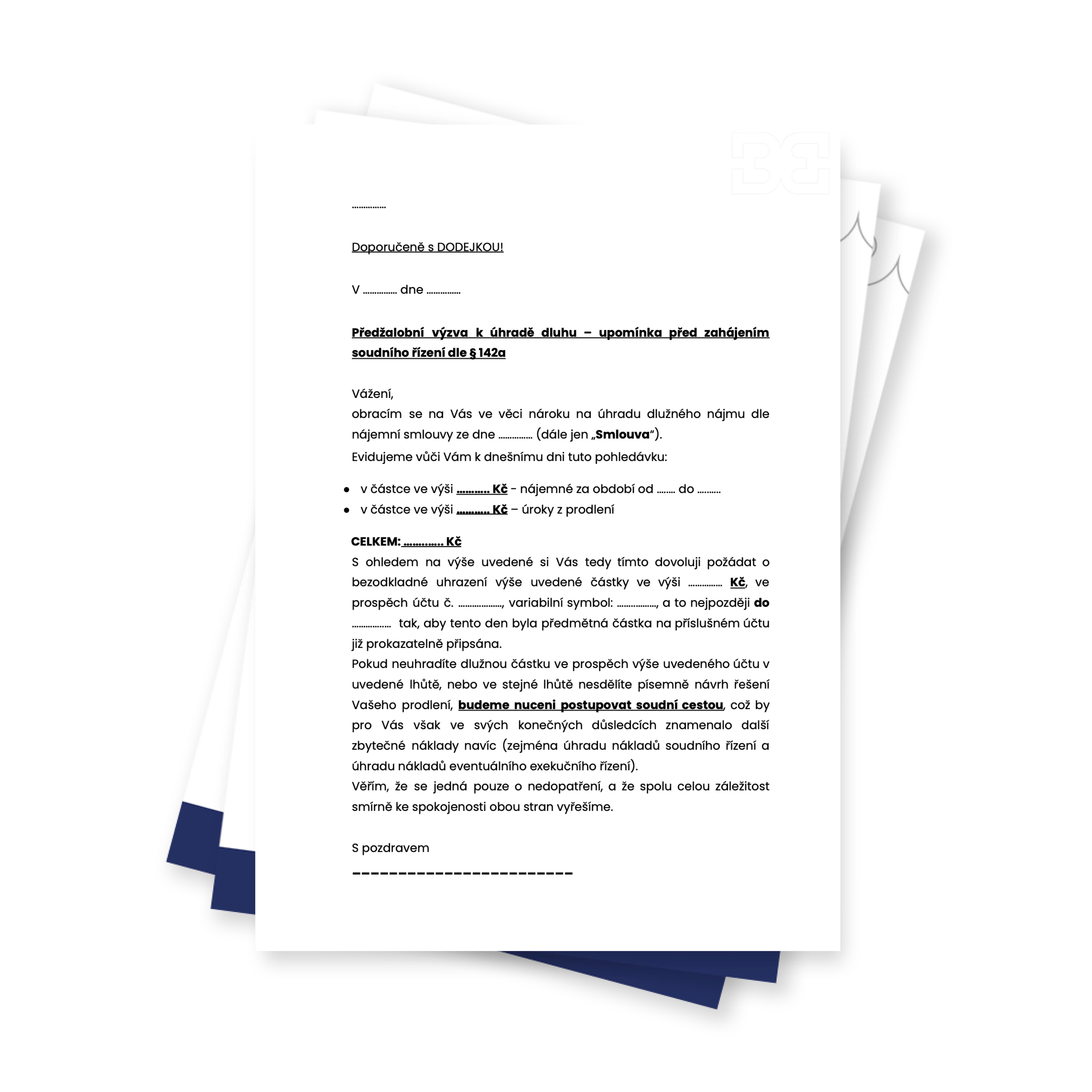
Non-paying and problematic tenants are among the main risks of letting a property. The landlord loses money while also being unable to deal with the flat for the duration of the dispute. Since 1 January 2026, the Code of Civil Procedure has therefore included an eviction order (§ 175a), which can speed up the eviction of a flat after the tenancy ends.
What is an eviction order and how does it work?
An eviction order works similarly to a payment order. The court may decide without ordering a hearing — meaning quickly and solely on the basis of written evidence. For flat owners, this is a significant change. Until now, court-ordered eviction was a lengthy process, and landlords often preferred to give up. With an eviction order, they now have a quick, straightforward and less expensive way of removing a non-paying tenant. The landlord simply submits the necessary documents (the lease agreement, notice and a request to vacate), and the court may issue an order requiring the tenant to:
And this is where the fundamental change comes in: if the tenant does not file an objection, the order becomes final and enforceable. The landlord can then immediately ask a bailiff to evict the flat — without lengthy court proceedings.
If you are interested in what a lawyer says about an eviction order, you can watch the video.
When can an eviction order be used?
An eviction order is not a universal solution for every dispute. It may only be used where:
-
The tenancy has already ended. The agreement has expired, been terminated, or an agreement to end it has been concluded, but the tenant refuses to move out. You can download a lease agreement termination notice template free of charge from our website.
-
The landlord has requested that the tenant vacate the property in advance — in writing and at least 14 days before filing the application with the court.
-
No dispute concerning the termination notice has been filed — if the tenant is challenging the validity of the notice in court, the order cannot be used.
-
Written evidence is available — no speculation, but clear documentation.
If these conditions are met, the court may issue an order without a hearing. The law does not set a fixed time limit for issuing it. If the tenant files an objection in time, the order is cancelled and the court orders a hearing (§ 174(2) in conjunction with § 175a(4) of the Code of Civil Procedure). In disputes concerning the eviction of a flat after the tenancy ends, the court should generally decide within six months of the proceedings commencing (§ 196(3)). Further details can be found in the section on eviction orders below.