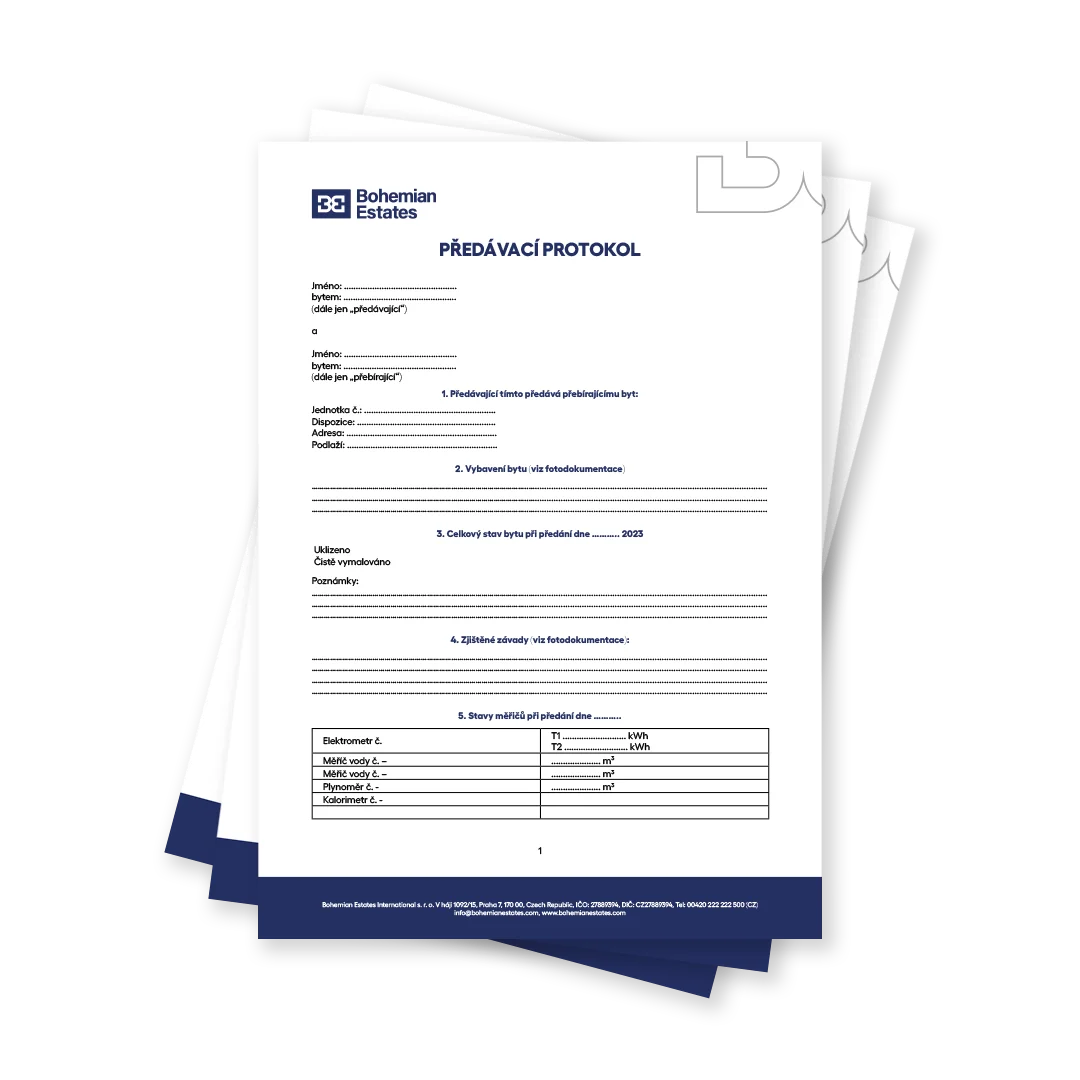
Handover protocol at the end of the tenancy: procedure and checklist
At the end of the tenancy, the protocol records when and in what condition you took the flat back. The flat is deemed returned when the landlord receives the keys and nothing prevents them from accessing the flat (§ 2292 of the Civil Code). Therefore, record the handover date precisely.
Procedure for taking back a flat
- Arrange the handover date no later than the day the tenancy ends. If the tenant does not return the flat on time, you are entitled to compensation equal to the agreed rent for the period of delay (§ 2295).
- Take the protocol from when you took over the flat at the start of the tenancy, along with the photographs taken at that time. Compare the condition room by room.
- Take readings and photographs of all meters. The readings will be used for the annual statement of utilities, which you must deliver to the tenant no later than four months after the end of the billing period (§ 7 of Act No. 67/2013 Coll.).
- Count the keys, chips and remote controls, and compare them with the number handed over at the start of the tenancy.
- Record defects and damage, stating for each whether it is normal wear and tear or damage for which the tenant is responsible.
- State how the security deposit and any outstanding amounts will be settled. Both parties should sign the protocol, and each should keep one copy.
Normal wear and tear or damage?
The tenant returns the flat in the condition in which they received it, taking into account normal wear and tear from ordinary use and defects that the landlord is obliged to remedy (§ 2293). The law does not set a precise threshold; the following examples are for guidance only.
Examples for recording in the protocol| Area | Usually normal wear and tear | Usually damage |
|---|
| Walls | Slightly faded or greyed paintwork after several years | Holes from wall plugs beyond what was agreed, graffiti, mould caused by insufficient ventilation |
|---|
| Floors | Minor scratches in areas of foot traffic | Deep scratches, burn marks, swelling caused by spilled water |
|---|
| Furnishings | Wear and tear consistent with the age of the appliance | Broken glass, damaged doors, missing components |
|---|
| Bathroom | Grout discoloured after years of use | Cracked washbasin, damaged tap |
|---|
Alterations made by the tenant without the landlord’s consent must be removed at the end of the tenancy unless the landlord states that this is not required (§ 2293 para. 3). For alterations made with consent, this applies only if you agreed that the property would be returned to its original condition.
What to include in the handover protocol at the end of a tenancy
- the date and time of handover, the flat’s address and the names of those present,
- readings from the electricity meter, gas meter, water meters and heat allocators, including meter numbers,
- the number and type of keys, chips and remote controls,
- the condition of each room and its fittings, with references to photographs,
- identified defects and damage, an estimated cost and who will pay for them,
- items left in the flat and an agreement on their removal,
- the bank account number for returning the security deposit and an agreement on its settlement,
- the signatures of both parties, or a note that a signature was refused.
When the tenant refuses to sign the protocol
Record in the protocol that they refused to sign and attach dated photographs. A witness who signs the protocol can help. Send a copy to the tenant by recorded delivery or email and invite them to comment on the record. Do not throw away any items they have left in the flat: if they do not collect them without undue delay, you may sell them at their expense after giving notice and an additional deadline (§ 2296).
Returning the security deposit after handover of the flat
Return the security deposit at the end of the tenancy. You may deduct anything the tenant owes you under the tenancy, while the tenant is entitled to interest at least at the statutory rate (§ 2254 para. 2). Documented damage beyond normal wear and tear and any rent arrears should therefore be quantified in the protocol or shortly afterwards. The calculation of interest is explained in the article interest on the security deposit. If the tenancy ends by notice, the procedure and deadlines are summarised on the termination of tenancy page.
Legal status: Civil Code and Act No. 67/2013 Coll., as effective from 1. 1. 2026, verified in the e-Sbírka on 27. 10. 2026.