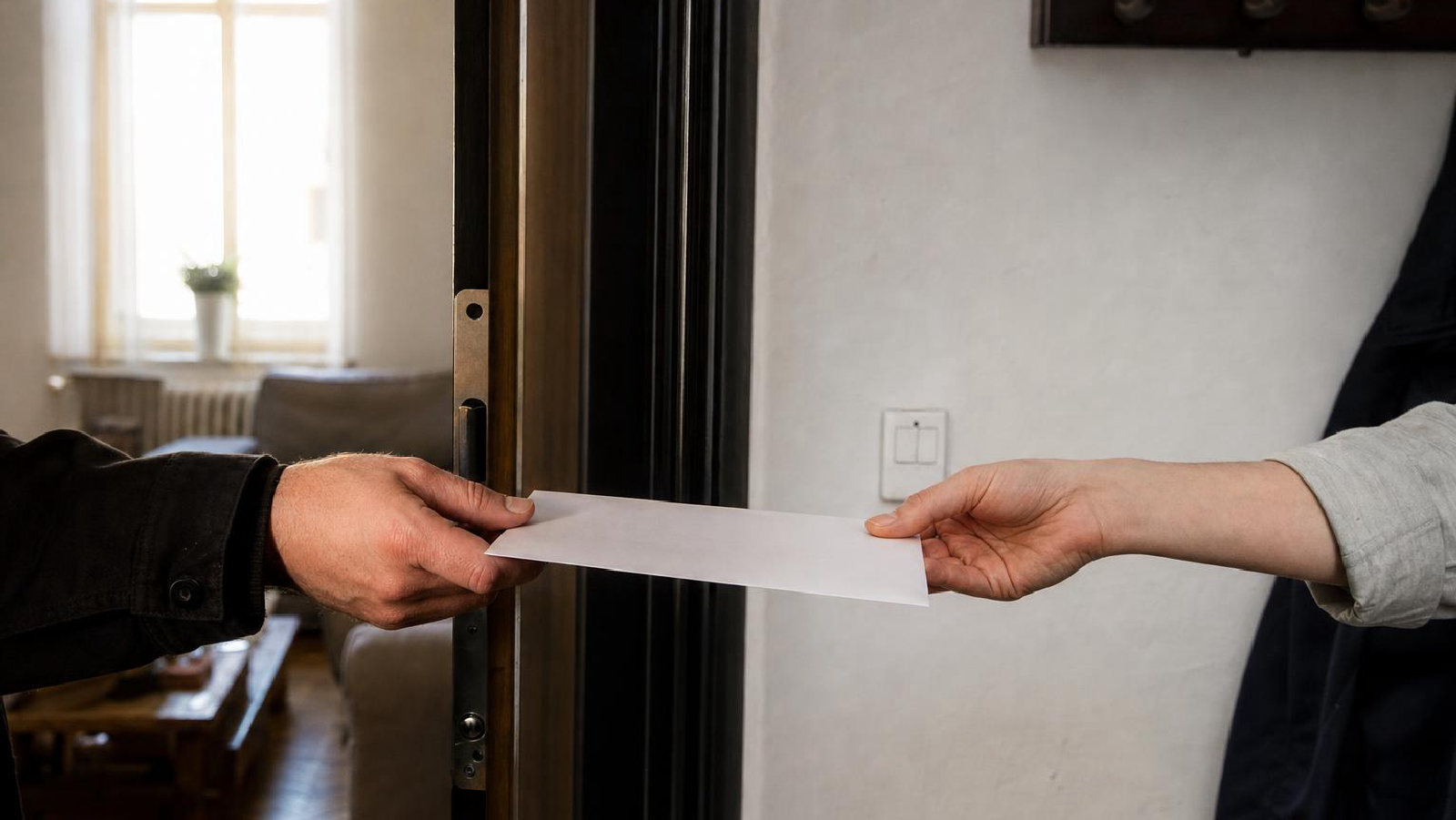
When delivering notice, ask yourself two separate questions: What text did you hand or send to the tenant? When did the notice reach them? Under Section 2286(1) of the Czech Civil Code, notice must be in writing and must reach the other party. A copy of the written notice helps you establish its wording but does not show whether it reached the tenant. Proof of posting, in turn, records dispatch; do not simply copy the date it shows into the field for the date of receipt.
How to keep a record of delivery
- If delivering by hand, prepare an identical copy for your own records and ask the tenant to acknowledge receipt on it and give the date. Word the acknowledgement so that it confirms receipt of the particular notice, not that the tenant agrees with the reason given. You will then have the text and the date of receipt together.
- If sending by post, keep the proof of posting with your copy of the notice and attach any available evidence that it reached the tenant. Record the posting date and the details of receipt separately. If you only have evidence of posting so far, make a note of what you still need to establish.
These are recommended ways to keep evidence. Section 2286(1) of the Czech Civil Code does not require you to use either hand delivery with acknowledgement or delivery by post.
For postal items, distinguish whether the item arrived from when it arrived
The presumption under Section 573 of the Czech Civil Code concerns a postal item sent through a postal service provider that has arrived. Such an item is presumed to have arrived on the third working day after dispatch or, if sent to an address in another country, on the fifteenth working day after dispatch. These are working days, not calendar days. The rule answers the question of when an item that arrived did so. It does not settle the prior question of whether the item arrived at all.
A declaration of intent takes effect in relation to an absent addressee from the moment it reaches them. If the other party knowingly prevents it from reaching them, it is deemed to have duly reached them (Section 570(1) of the Czech Civil Code). If all you know is that the tenant did not take delivery of the item, record that fact. Failure to take delivery does not in itself mean that the tenant knowingly prevented the item from reaching them.
If you wish to withdraw a notice you have already sent, compare the times at which the two communications reached the other party, not the order in which you sent them. You may withdraw a written declaration of intent if the withdrawal reaches the other party before or at the same time as the original declaration (Section 572 of the Czech Civil Code).