How to let a flat
Would you like to let your flat at a good price, to decent tenants and ideally without any hassle? Then you are in the right place. We have prepared a clear guide that will take you through the entire letting process step by step.

Would you like to let your flat at a good price, to decent tenants and ideally without any hassle? Then you are in the right place. We have prepared a clear guide that will take you through the entire letting process step by step.
Published 29/10/25, 12:52 p.m.
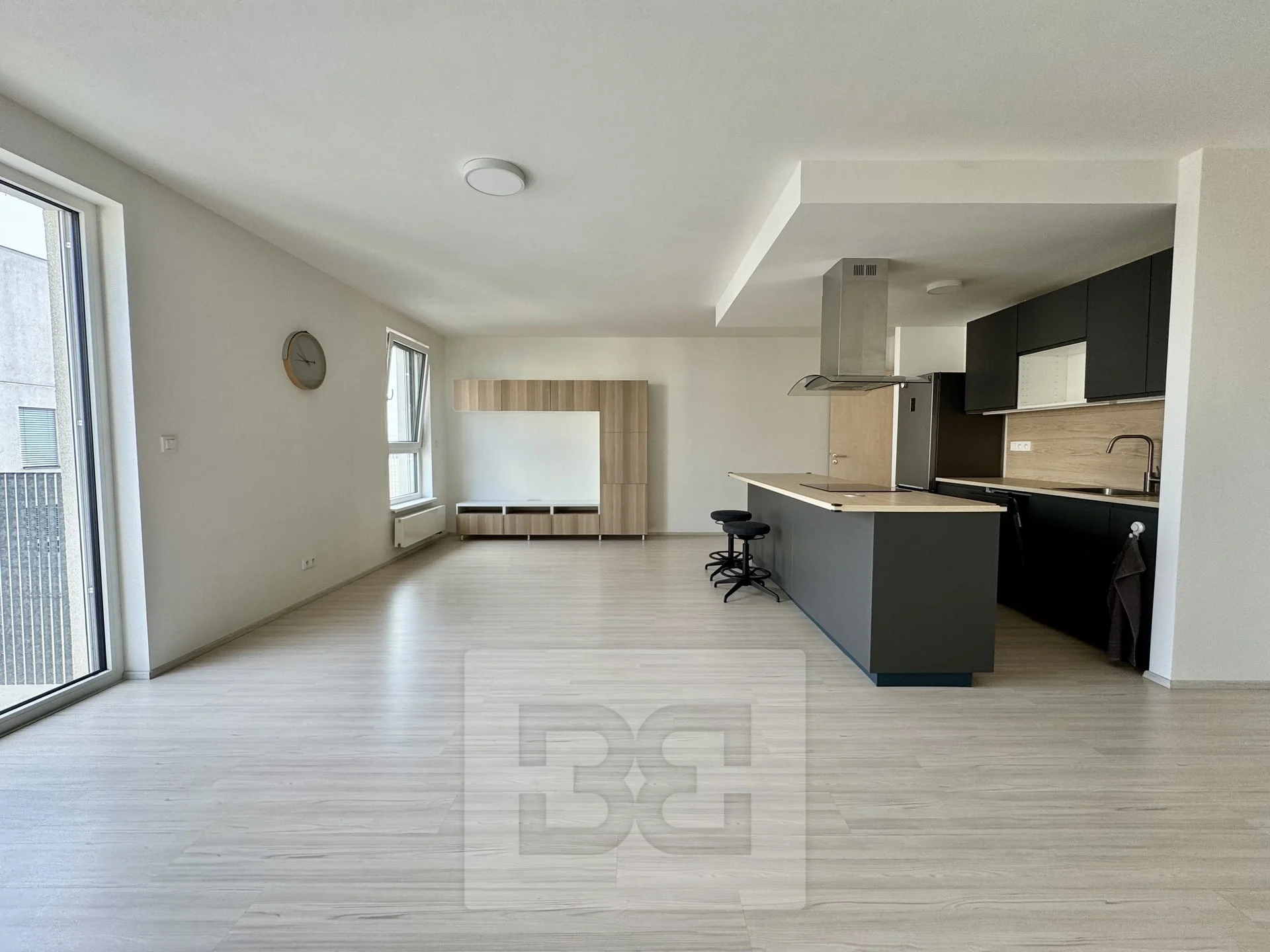
Before you start looking for tenants, you need to prepare the flat properly. Make sure it is clean, tidy and feels welcoming. Bright, airy spaces make the best impression, rather than rooms crowded with too much furniture and belongings. Consider home staging. A nicely arranged flat with high-quality photographs will attract more prospective tenants and be easier to let at a higher price.
A well-written advert need not be long or complicated, but it should include information that will help filter suitable applicants and save both parties time:
Basic information about the flat: location, layout, floor area, furnishings, rent and utilities.
High-quality photographs: they should show the property in its best light while including everything important; alternatively, add a video tour or drone footage.
Advertising on property websites: the most widely used include Sreality.cz, Reality.idnes.cz and Realitymix.cz. You can also use free websites such as Bazoš.cz or social media, for example Facebook groups focused on housing.
A well-prepared advert will attract more prospective tenants and increase your chances of letting quickly and at a higher price.
To determine the rent, look up rental prices in rent price maps for your area and assess other factors:
Rent price map: here you will find indicative rental prices for individual districts of large cities, based on a reference new-build flat.
Compare adverts: compare the rents of several similar properties in the area.
Other factors: reflect the flat’s condition and individual features in the price, such as a balcony, lift or parking space. Consider the current market situation and the state of supply and demand, for example local job opportunities or whether it is a university city.
The ideal rent is neither too low nor too high.
At a low price, the flat will let quickly and tenants will be more likely to accept shortcomings, but you will be losing money unnecessarily. There is also a greater risk of attracting less creditworthy applicants.
Conversely, an excessively high price will deter many applicants, and it may take longer to find a tenant, meaning you also lose several months’ income. Another risk is that the tenant may not be able to afford such a high rent in the long term.
Tip: Rent calculator. Save time and let us calculate the optimal rent for you completely free of charge.
You can screen a tenant in several ways. Do not underestimate this stage: choosing the wrong tenant will cause you more trouble than the time it takes to check them.
Warning! A friend’s recommendation is not sufficient screening. You can check a tenant in the following ways:
In debtor registers:
Extract from registru.cz – an extract from all the above registers
As part of our real estate service, screening is free of charge.
At an in-person meeting:
Ask where they work and what type of contract they have; you can request a bank statement as proof of regular income. Find out how long they wish to stay in the flat and where they lived previously. References from a previous landlord are a major advantage. You can prepare a questionnaire so that you do not forget anything. Above all, listen to your intuition too.
On the internet and social media
You can easily verify online the information provided by the applicant.
A well-drafted lease agreement is the foundation of problem prevention. It is worth investing in a lawyer – not everything you want to include in the agreement is legally valid.
What to include in a lease agreement:
Identification details – your personal details and those of the tenant, as well as a detailed specification of the property being let.
Letting details – the amount of rent, separately stated utilities, bank account number and payment due dates.
Term of the agreement: you can conclude it for a fixed term or an indefinite period. It is commonly concluded for one year with the option of automatic renewal.
Refundable security deposit and contractual penalties – the amount of the security deposit, how it is to be paid, to which account, the conditions for its return, the interest rate, etc. A refundable security deposit can be up to 3 months' rent, but it is commonly between one and two months' rent.
You can also agree a contractual penalty, which, together with the security deposit, must not exceed the equivalent of 3 months' rent.
The difference between a security deposit and a contractual penalty lies in their purpose.
The security deposit is used to cover unpaid rent or damage to the flat.
A contractual penalty covers other matters arising from a breach of obligations. Therefore, specify all obligations clearly in the agreement, such as compliance with the house rules and the provision of routine maintenance.
Attention! If a tenant cannot afford to pay the security deposit, treat this as a warning sign of their inability to pay.
The rights and obligations of the tenant and landlord – these should be clearly set out in the agreement from the outset, so that you do not later dispute what each party expected or assumed.
Routine maintenance of the flat – specify what maintenance you expect the tenant to carry out. State the financial limit for repairs payable by the tenant. Major repairs are the owner's responsibility.
Notice – specify the conditions for terminating the tenancy.
Handover report – the agreement should include a detailed handover report. It protects you if a tenant removes something from the flat, damages anything or, in an extreme case, as evidence for a bailiff who comes to seize items from your flat. You can download our template handover report free of charge.
Insurance – you can include an obligation in the agreement for the tenant to take out liability insurance. If they cause damage to you or a third party, the costs are covered by the insurer.
You can download our lease agreement template, updated in line with the latest regulations, free of charge.
Attention! Tenants are protected by the Civil Code – for example, you cannot prohibit them from keeping pets or smoking. You must not enter the flat without prior notice, nor can you disconnect a tenant from utilities (even if they fail to pay).
A tenant's permanent residence is an issue that often causes unnecessary concern among landlords. Under the law, a tenant has the right to register their permanent residence at the address of the rented flat if they have a valid lease agreement. The agreement is sufficient proof for the population register, and the landlord's consent is not required.
Attention! A provision in the agreement prohibiting a tenant from registering their permanent residence in the rented flat would be contrary to the law and therefore invalid.
The difference between a tenancy and a sublease essentially lies in the contractual relationship.
A tenancy is concluded directly between the landlord and the tenant.
A sublease is an arrangement in which the tenant rents the property to a third party, the subtenant.
The key difference is the level of protection afforded to the tenant, which is naturally lower for a subtenant, as their relationship depends on the primary relationship between the landlord and tenant.
Our property management from Bohemian Estates works by us renting the flat from you. We become your tenant and pay you rent. We then sublease the flat to a subtenant and handle all matters relating to the sublease.
You may now feel that everything is taken care of: you have a vetted tenant, a signed lease agreement and regular rental income. But do not forget about tenant care.
Transferring utilities to the tenant: this avoids disputes in the event of high consumption; moreover, the utility provider can disconnect tenants for non-payment, whereas you cannot.
Rent checks – make sure rent is paid on time. This may seem like unnecessary advice, but in our experience private landlords often do not monitor income systematically.
Reminders: if a payment is late, send the tenant a reminder without delay. You can download our reminder template free of charge.
Respond to tenants' requests: tenants may need various confirmations for authorities, require an additional key to be made, and so on. Do not keep them waiting unnecessarily, so that you do not damage the relationship.
Arrange repairs: things regularly break down or simply reach the end of their service life. Try to deal with repairs promptly to prevent damage to the property, such as water leaks.
Checking the condition of the flat: after some time, inspect the property or ask the tenants for photographic documentation of its condition.
Annual statement of utilities: do not forget to provide tenants with the annual statement of utilities. Bear in mind that some items, such as the repair fund, must not be charged to them.
Validity of the lease agreement: keep track of when the lease agreement ends. Renew it well in advance, or start looking for new tenants.
Attention! Tenant care can take more time than you expect. If you neglect it or make mistakes, you risk dissatisfaction and a higher tenant turnover.
Rental income is taxed under § 9 Act No. 586/1992 Coll. on Income Taxes. Income from renting property is subject to 15% tax for individuals and 21 % for legal entities. It must be declared in the tax return even if it is secondary income. Expenses can be claimed either as a flat-rate 30 % allowance or as actual costs (such as repairs). Renting is not subject to health or social insurance unless it constitutes a business activity (for example, short-term accommodation via Airbnb), in which case insurance is payable and a 60% flat-rate allowance may be used.
Risks of renting out a property also include unpleasant issues such as non-paying tenants, gaps in rental income and vandals.
This can sometimes happen despite a thorough selection process. Missing rent can put a major strain on your budget, especially if you have financial commitments such as a mortgage. If you want the certainty of always receiving rent, you can use our guaranteed rent service.
When a tenant leaves and a new one has not yet been found, gaps in rental income arise, which can amount to one month's rent – or even three months' rent. For these situations, it is important to communicate with tenants in good time to find out whether they intend to stay in the flat or whether you should start looking for new tenants.
If a tenant causes damage, you can cover it from the security deposit. If the tenant has taken out liability insurance, the costs may be covered by the insurer.
Can I rent out a flat without a real estate agency? Yes. Everything a real estate agency would do for you can also be managed yourself. This guide will help you through each step, so you can be sure you have not overlooked anything.
If you do not want to deal with every aspect of renting out your property yourself, you can leave the whole process to us. Life is too short to spend time on things that do not fulfil you. Secure a truly passive income with our guaranteed rent. We will take care of everything related to the tenancy for you:
Regular rent: rent always paid on time, even if the tenant is late or does not pay.
Occupancy of the flat: we ensure that the flat remains continuously occupied and that there are no gaps in rental income.
Perfect condition guaranteed: we will return the flat in the condition in which we took it over.
Complete real estate service: we will photograph and advertise the flat, arrange viewings, prepare and sign the agreements.
Tenant screening: the service includes checking prospective tenants for outstanding debts.
Tenant care: we handle tenants’ requests, repairs, monitoring lease expiry dates and renewals.
Property care: we arrange repairs, renovations, gardening work and insurance.
This means you do not have to worry about anything. We handle everything for you, and you simply receive the rent each month.