
How to let a flat successfully

Letting a property is an excellent way to secure a regular income. To help you achieve this goal as efficiently as possible, we have prepared a detailed guide to take you through the entire process, from preparing your flat to managing tenancy relationships.
Published 8/4/24, 3:19 pm
Preparing your flat for letting
Before you start looking for tenants, make sure your flat is in excellent condition. A clean, well-maintained space is key to making a good first impression. Investing in a thorough clean and repainting, whether in time or money, will certainly pay off. As for furnishings, the absolute basics are sufficient. Above all, ensure that the kitchen and bathroom are in good condition, as these are understandably among the most important criteria by which prospective tenants assess a flat. Basic appliances should also be included. Tenants generally prefer to use their own furniture to suit their taste.
Setting the rent
Setting the right rent price is the first key step. A price that is too high may discourage potential applicants, leaving you waiting a long time to find a tenant. The maths is simple: if you wait 2 months for a tenant, you lose 2 months’ rent. If, on the other hand, you let the flat immediately for less, you are still two months’ rent ahead, and you can increase the rent in future in accordance with the law. Conversely, a price that is too low can reduce your income and attract less financially reliable tenants, who may then have difficulties paying. When setting the price, take into account the location, size and condition of the property, as well as the type of tenants who will live there. Compare rents for similar flats in the area and set your price accordingly. If there is insufficient interest, you can reduce the price later so that the flat does not remain vacant unnecessarily long.
High-quality property advertising
High-quality photographs are the foundation of an attractive listing. Photograph the property with a professional camera, using different lenses and angles to present the flat in the best possible way. Ensure the flat is well lit when taking photographs. You can also create a video tour or add drone footage of the property. Then place the photographs on widely visited property portals. The best-known are Sreality.cz, Reality.idnes.cz and Realitymix.cz. You can also harness the power of social media and share the listing on Facebook, for example, with friends or in various groups. Free classified advertising sites such as Bazoš.cz are another option. Describe the flat in the listing as clearly as possible, including what it looks like, what it contains and what is available in the area.
Selecting and vetting a tenant
You now have interested applicants, but it is not yet time to get carried away and let the property to the first person who comes along. Remember that moving unreliable tenants into your property can lead to a great deal of trouble. Of course, you can never be completely certain that no issues will arise with a tenant, but it is advisable to minimise the risk from the outset.
-
Interview with the prospective tenant – ask where they work, what type of contract they have, how long they intend to stay in the flat, where they lived previously, and if appropriate request references from their previous landlord; above all, trust your personal impression of the tenant.
-
Debtor and enforcement registers – check applicants in public registers for a small fee.
-
Online and social media check – you can try searching for information about the tenant on social media and online.
Lease agreement – preparation pays off
A well-drafted lease agreement helps prevent various problems in the future. Consider every possible scenario so that you protect your interests. However, you cannot include unreasonable rules in the agreement that conflict with the law. Bear in mind that tenants are afforded greater protection under the Civil Code than property owners. For example, if a tenant does not wish to move out, you have no right to enter the property without notice, interfere with their belongings, change the locks or disconnect utilities. Doing so would constitute the criminal offence of violating the freedom of the home. Therefore, do everything possible to prevent problems and give the preparation of the agreement the attention it deserves.
Include the following in the agreement:
-
All personal details of both you and the tenant, and a precise specification of the property.
-
Rent details – the rent amount, account number and payment dates
-
Insist on payment of a security deposit. If tenants have difficulty paying the security deposit, take note: this indicates their ability (or inability) to pay.
-
You may also agree a contractual penalty in the agreement. The combined total of the security deposit and contractual penalty must not exceed 3 months’ rent. The security deposit can be used to cover unpaid rent or damage to the flat caused by the tenant. A contractual penalty can be used to cover other matters arising from a breach of obligations. It is therefore advisable to state all obligations in the agreement. These may include complying with house rules, ensuring routine maintenance, etc.
-
Specify the routine maintenance of the flat for which the tenant is financially responsible; the owner pays for major repairs.
-
State in the agreement that the tenant is required to take out liability insurance. If they then cause damage in the flat to you or your neighbours, the costs will be covered by the insurer.
We have prepared a lease agreement template for you, which you can download free of charge by clicking on the image below.

Handover protocol
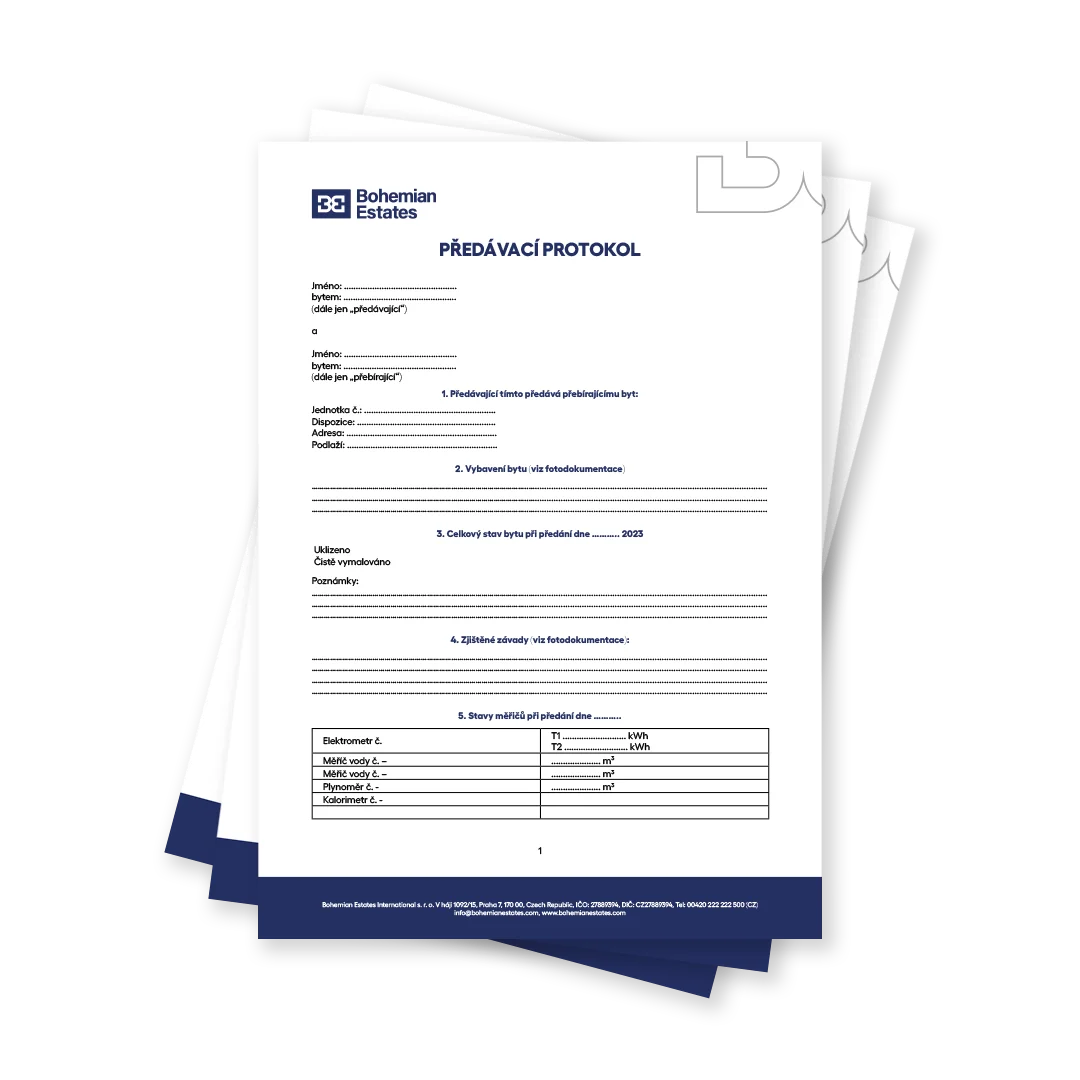
When handing over the flat, sign a detailed protocol listing all furnishings and their condition. This will help you avoid disputes if anything is missing or damaged in the flat. It is also important in the event of enforcement proceedings against the tenant, when you may need to prove that the furnishings belong to you rather than the tenant. You should also keep purchase receipts for the furnishings for this purpose.
We have prepared a handover protocol template for you, which you can download free of charge by clicking on the image below.
Lease term
How long should you enter into a lease for? It is common to agree a fixed term of one year, with an option to extend. An indefinite term is not recommended, as it can then be very difficult to have tenants move out. If you have a property suitable for holiday letting, you can rent it to tourists. This is then accommodation services provided as part of a business, and you must hold the appropriate trade licence and comply with the resulting obligations.
Tenant care
At this stage, when you already have tenants who pay their rent regularly, you have won half the battle. However, do not rest on your laurels; here are a few things to look out for:
-
Transfer utilities to the tenants’ names – you will then not need to dispute payment for high consumption, and utility providers have the right to disconnect tenants who do not pay, whereas you do not.
-
Regular rent checks – make sure the rent has arrived on time; if it is late, remind the tenants so they do not get the impression that rent is not particularly important to you.
-
Payment reminders - if there is a longer delay in rent payments send reminders.
-
Deal with repairs promptly – faulty items and worn-out materials are unavoidable. Try to resolve them as soon as possible, so that tenants remain satisfied and you prevent further deterioration of the property – such as water leaks, for example.
-
Condition of the flat - request an inspection from time to time, or at least up-to-date photographs of the flat’s condition.
-
Annual statement of utilities - prepare annual statements of utilities regularly, and remember that, for example, you may not charge the repair fund to tenants.
-
Lease agreement validity - keep track of the end date of the lease agreement and extend it in good time, or begin looking for new tenants.
-
File a tax return – do not forget that rental income must be taxed.
When a tenant does not pay
Of course, horror scenarios can happen too. To evict a tenant, they must owe 3 months’ rent. You can then file an action for vacant possession with the District Court. Once the court has ruled, the tenant has 15 days to vacate the property. If they fail to move out within this period, you can use the services of a bailiff. Vacant possession is at your expense, and you are obliged to store the tenant’s belongings at your own cost. You can then seek compensation for damages and unpaid rent from the tenant. However, debtors often have no assets to recover from, and successful enforcement is achieved in only one case out of five. Not to mention that the entire process can take months.
How to avoid the hassle – professional property management
One way to avoid the hassle of letting your flat and secure a truly passive income is to entrust it to a professional property manager who has every aspect of the tenancy under control. Our company, Bohemian Estates, offers guaranteed rent, meaning you receive your rent in all circumstances, even when the flat is vacant or the tenant misses payments.
Letting a property can be an excellent way to generate passive income. We hope our guide will be a useful tool on your path to success. Good luck!